
A publishing catalogue should invite exploration, celebrate authors, and make discovery effortless. When titles are trapped in rigid tables or disconnected pages, great books are easily missed. A considered digital structure turns your catalogue into a vibrant discovery engine.
Core Philosophy
A catalogue becomes a home for discovery when every title connects seamlessly to its author, its imprint, and the reader’s interest.
1. Start with the Catalogue Information Architecture
A high-performing catalogue begins with consistent metadata and taxonomy. Standardize how your titles, authors, formats, imprints, and subjects are represented before building the visual presentation. Clarify the essential fields your readers need (genres, synopses, publication dates, excerpts) and separate them from internal operational data.
Structured taxonomy ensures your catalogue can scale cleanly from fifty titles to thousands without breaking navigation or confusing search engines.
2. Create Meaningful Routes to Discovery
Readers navigate with different intentions. Some arrive searching for a specific author or ISBN; others want to browse by theme, award lists, or seasonal reading recommendations. Your platform should support both direct search and serendipitous browsing with intuitive filtering options.
Avoid organizing public categories solely around internal departmental divisions. Use natural, reader-centered genres and themes that mirror how book buyers actually discover new releases.
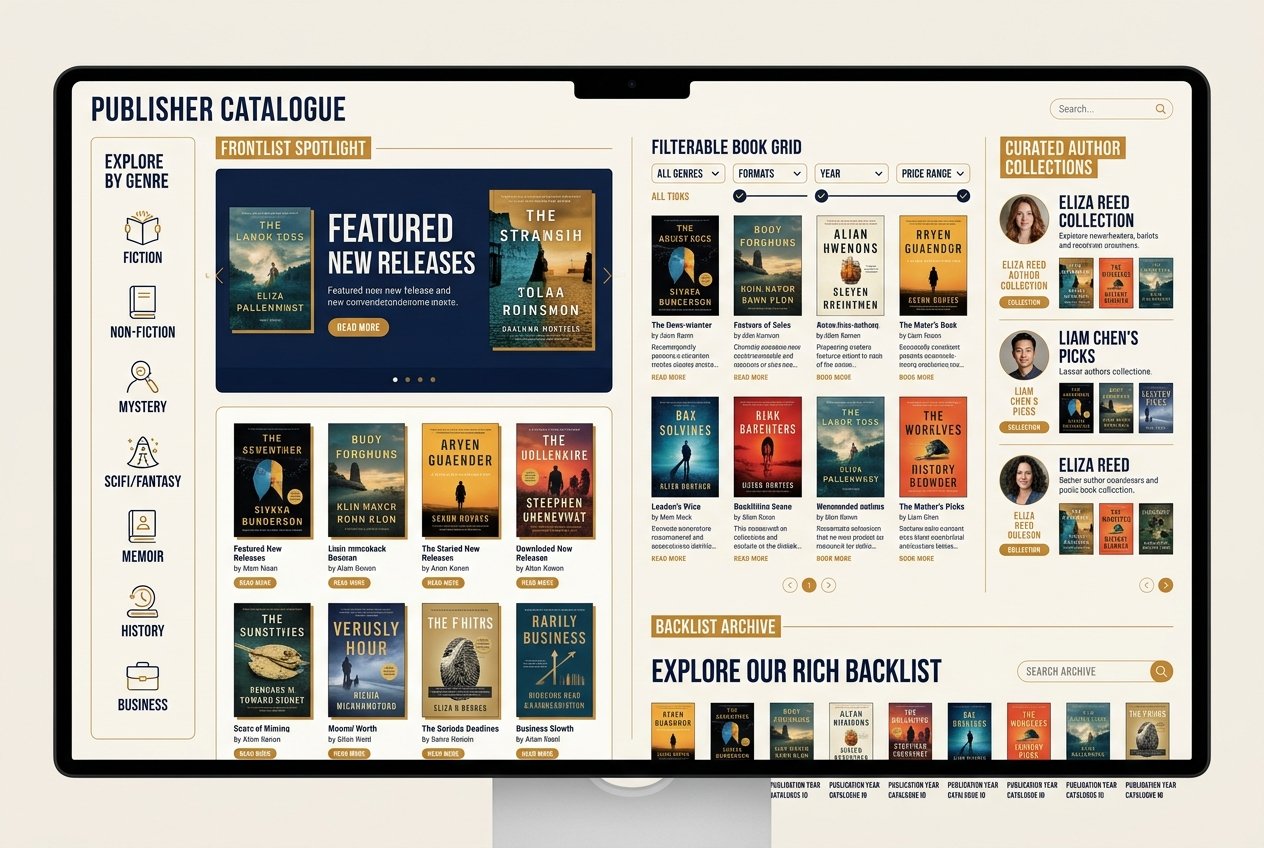
3. Seamlessly Interconnect Authors and Books
Every author profile should link directly to their complete bibliography, upcoming speaking dates, and media resources. In reverse, every book landing page should link prominently back to the author’s biography. These bidirectional pathways encourage visitors to delve deeper into your publishing list rather than hitting dead ends.
Ensure cover imagery is crisp and format details (print editions, audiobooks, ebooks) are transparent so readers can compare options with confidence.
4. Balance New Releases with Evergreen Backlist Titles
While marketing naturally prioritizes frontlist launches, backlist titles are often the financial bedrock of a publishing house. Build thematic collections, reading guides, and “if you enjoyed this” recommendations that regularly draw older titles back into reader conversations.
Assign clear internal roles for maintaining availability, updated purchase links, and rights enquiries so your catalogue remains an accurate source of truth for trade buyers and readers alike.
Modernise Your Publishing Platform
Discover our tailored publisher website solutions designed around connected catalogues, author hubs, and direct audience engagement.