
A useful author website does more than introduce you. It helps readers find your books, explore your world and stay connected. The best starting point is a clear understanding of your reader and the next step you want to make easiest.
Key Principle
Give every page one clear job, and every reader a purposeful, friction-free next step.
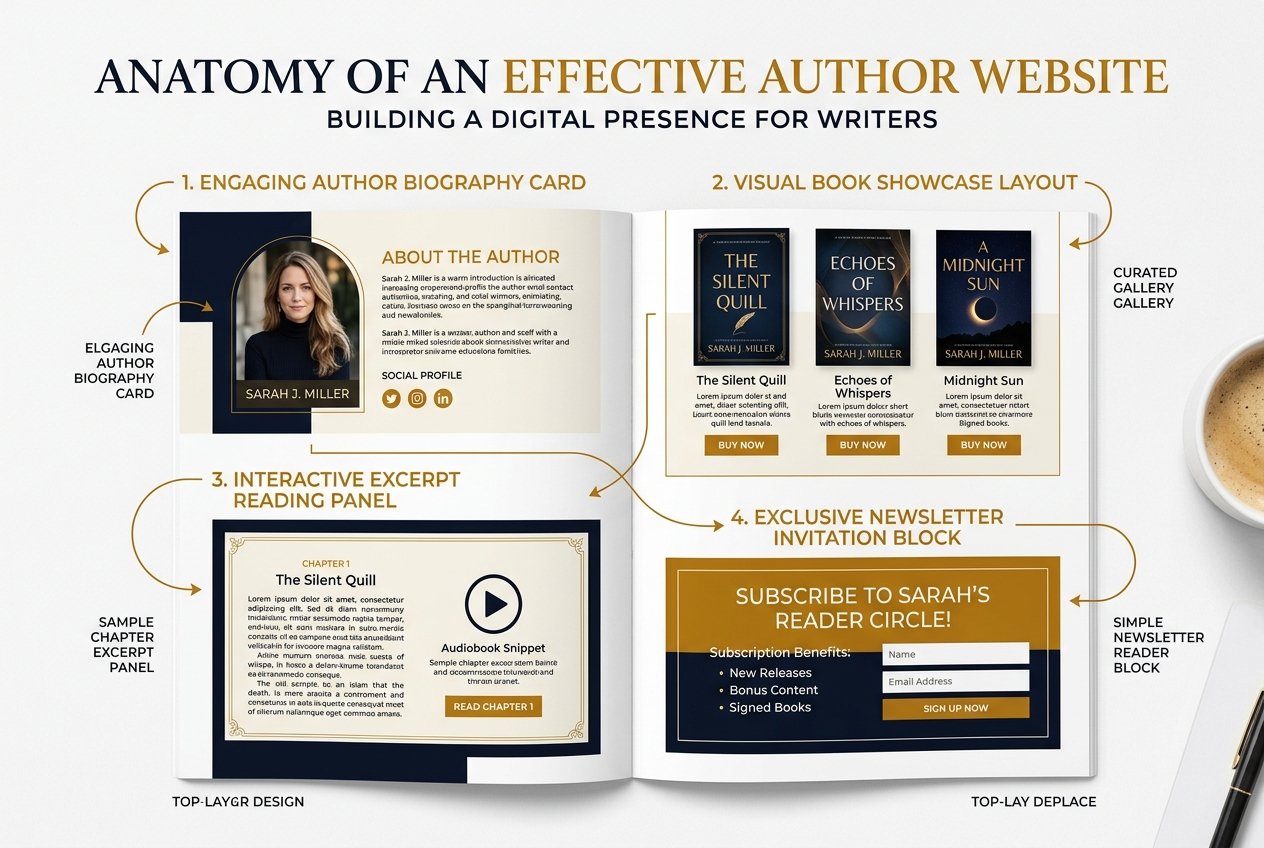
1. Start with a Clear Introduction
A reader arriving for the first time should quickly understand who you are and what you write. Lead with your name, a concise introduction and an immediate route to your books. Your homepage does not need to tell your entire life story on the first screen; it needs to invite the next useful step.
Choose a primary action that reflects your current focus. That might be exploring a new release, browsing your full backlist or joining your email community. Avoid overwhelming visitors with competing banners, popups, and conflicting requests.
2. Give Every Book a Dedicated, Useful Page
Each title deserves room for its high-resolution cover, synopsis, format specifications (hardcover, paperback, ebook, audiobook) and clear purchase links. An excerpt helps readers decide whether your writing voice resonates with them. Include reviews only when you have permission to use them and can attribute them accurately.
If a book is part of a series, explain where it sits in the sequence and link to the other titles. Keep retailer choices prominent and verify that purchase links point to live, correct listings.
3. Make Room for the Person Behind the Work
Your biography should be more than a dry list of credentials. Share the personal context, inspirations, and research that help readers connect with your writing. If speaking engagements or interviews are part of your routine, provide a concise biography and high-resolution approved author photographs available for media downloads.
Only include events and appearances if you can keep them regularly updated. A clean, accurate schedule is infinitely better than an outdated calendar.
4. Build a Reader Relationship You Can Maintain
A dedicated newsletter gives interested readers a dependable way to hear what you are writing next, independent of changing social media algorithms. Be transparent about what subscribers will receive and how often you publish. Make signing up an intentional choice and provide an effortless route to unsubscribe.
Place your newsletter invitation naturally along the reading journey—such as following a book sample chapter or at the conclusion of an essay—where readers have already experienced the quality of your writing.
5. Design for Readers on Mobile Devices
More than half of your readers will explore your website on a smartphone. Check the complete journey on a small screen: Can someone read the synopsis comfortably without zooming? Is the navigation menu effortless to open? Are retailer buttons easy to tap?
Accessibility belongs in the foundation from the beginning. High-contrast typography, descriptive link text, and fast load times ensure that every reader enjoys an effortless visit.
Put These Ideas Into Practice
Explore our specialized website design solutions built specifically around authors, books, and long-term reader discovery.